
Roots to Wellbeing sessions explained
Thinking about joining Roots to Wellbeing, or referring someone you support? Here’s what to expect, from your first phone call to what people tell us they get out of it.
Roots is made possible by the National Lottery Community Fund.
Who goes to Roots to Wellbeing groups?

Roots is for anyone who’s finding life challenging right now. That might be because of their mental health, or because life has thrown a lot at them at once. Our groups include carers, single parents of children with additional needs, people living with stress, anxiety, low mood or long-term health conditions, people coping with loss, and many more.
Some people have loved being outdoors all their lives. For others, spending time in nature is completely new and feels a bit daunting. Either way is fine. We meet everyone where they are.
What’s the first step to getting involved?

Fill in the sign-up form on our website. You can also ask a friend or support worker to help you with it. On the form, you’ll tell us which Roots group you’d like to join.
The facilitator for that group will then text or email you to arrange a phone chat. The call usually takes 30 to 45 minutes. It’s a chance for you to find out more about the group, and for us to get to know you: what you’re hoping for, any worries you have, and any support you might need.
Before your first session, we’ll talk through how to get there. We can help with transport if you need it. If you’re nervous about arriving on your own, someone can meet you outside and walk in with you. We’ll also email you directions, details about facilities such as toilets, and tips on what to wear and bring.
What are the sessions like?

Each session lasts 2.5 hours and either starts or ends with a free shared lunch. That might be soup and a roll, jacket potatoes or sandwiches, and we’ll always ask about your dietary needs.
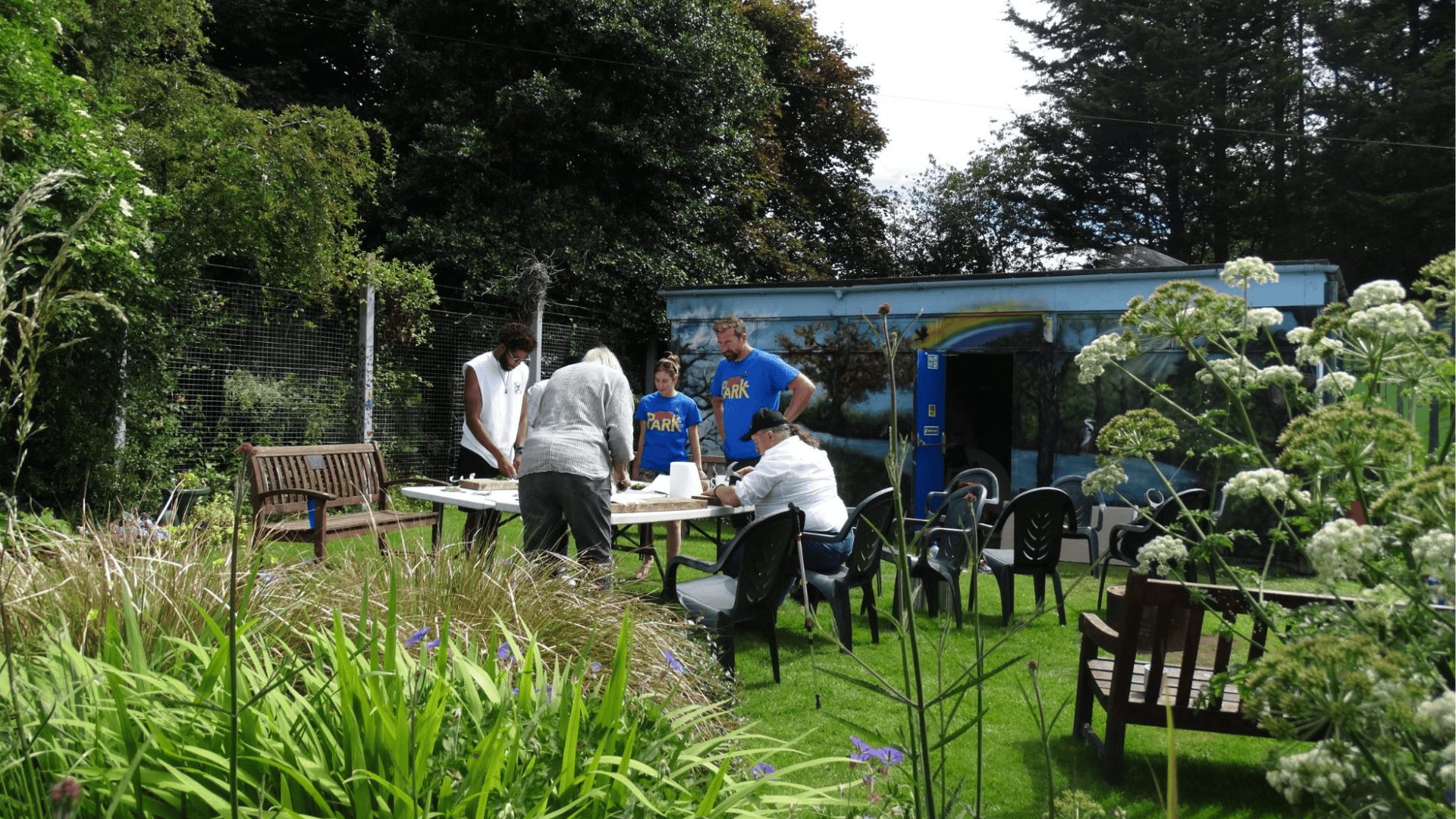
Every group has a Lead Group Facilitator with experience of supporting people’s mental health. There’s also a Nature Facilitator with a background in conservation, and usually a volunteer or two. Some of our volunteers have been through Roots themselves. Groups are small, with around 8 or 9 participants on average. You’re welcome to bring a supporter along at first.
Sessions start with a cuppa and a chance to settle in. The facilitator then introduces the week’s theme, which is based on the five pathways to nature connectedness developed by the University of Derby. Next comes a short grounding exercise to help everyone slow down and arrive. After that there’s a sharing circle, where you’re always free to pass.
What types of activities do you do each week?

Activities are linked to the week’s theme and mix creative, mindful and practical work. If the theme is beauty, for example, you might make leaf prints or take close-up photos of nature. Recently, for the autumn equinox, the group reflected on the summer, went on a sensory walk, and pressed natural objects into clay to make a tile as a reminder of their intentions for winter.
There’s practical work too, such as planting seeds and bulbs, pruning trees and sowing wildflower meadows. Everything can be adapted so you can take part in a way that works for you.
Every six weeks, you’ll also have a one-to-one call with your facilitator to talk about how things are going. These calls can lead to signposting or referrals to other support.
What do people get out of the programme?

Over 70% of participants tell us Roots has helped their wellbeing. For some, that means more confidence. For others, it means having tools to manage their mood using nature, which they can keep using after the programme ends. Most people tell us they’ve made friends and feel less isolated. Many go on to join community groups, volunteer, train, or return to work or education.
As one participant put it:
“I really loved Roots to Wellbeing and it played an important role in my recovery… Thank you so much for creating such a lovely, gentle space which helped me re-integrate after a period of loneliness.”
Ready to join? Sign up on our website, or get in touch if you’d like a chat first.


